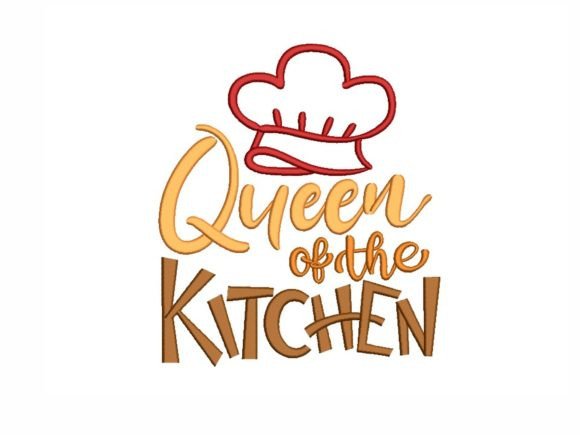
Queen of the Kitchen: A Designer’s Review for Craft Fairs
As an embroidery designer who has spent countless hours behind the hoop and even more time standing behind a booth table at weekend markets, I know that not every design is created equal. Some designs are beautiful in theory but fail to stop a scrolling thumb or a walking customer. Others, however, have that immediate "grab factor." Today, I am reviewing Queen of the Kitchen, a machine embroidery design that promises to celebrate the home cook with royal flair. I evaluated this piece not just for its aesthetic appeal, but for its viability as a high-converting craft fair product and a staple for handmade shop owners.
First Impressions: Bold, Playful, and Market-Ready
The first thing that strikes me about Queen of the Kitchen is its attitude. It does not try to be subtle. In the world of kitchen decor and handmade gifts, subtlety often gets lost on a crowded display table. This design feels bold, slightly humorous, and undeniably confident. It taps into the popular "farmhouse chic" and "modern rustic" trends that dominate Etsy and boutique markets, yet it maintains a timeless quality. The title alone suggests a narrative—this is not just an apron; it is a coronation for the person who feeds the family. For an embroidery business owner, this emotional connection is half the battle won.
Visually, the design likely balances decorative elements with clear typography. Whether it leans towards elegant script or bold block letters, the concept of royalty combined with domesticity creates a charming contrast. It feels premium enough to justify a higher price point but approachable enough to be an impulse buy for a friend’s birthday or a housewarming gift.
Product Versatility: Where This Design Shines
The true test of any digital embroidery file is its versatility. Can it survive on different fabrics? Does it look good small and large? Based on the description, which suggests use on chef’s bonnets, aprons, coats, hand towels, and napkins, this design is clearly intended for heavy rotation in the kitchen. Here is how I see it performing across various craft fair products:
- Apron Embroidery: This is the flagship product. An apron is a large canvas that allows the design to breathe. Stitching Queen of the Kitchen on the bib of a high-quality linen or cotton apron creates an instant bestseller. It transforms a utilitarian item into a statement piece.
- Tea Towel Embroidery: Hand towels are excellent volume sellers. However, caution is needed here. If the design is too large, it may overwhelm a standard towel. I recommend scaling it down to fit neatly in the corner or center, ensuring the stitch density does not cause the towel to pucker.
- Tote Bag Design: Canvas tote bags are sturdy and handle embroidery well. This design would look fantastic on a natural-colored canvas bag, appealing to shoppers looking for eco-friendly, reusable market bags with personality.
- Embroidered Patch: If the design holds up at a smaller size, turning it into an iron-on or sew-on patch is a brilliant move. Patches are low-commitment purchases for customers and allow you to sell the design without committing to a full garment.
- Chef’s Bonnets and Caps: Curved surfaces are tricky. If you plan to embroider on caps, ensure you have the right stabilizer and that the design is not too wide, which could cause distortion on the curved brim area.
Production Practicality for the Small Shop Product
For the Etsy seller or the weekend warrior crafter, time is money. A design that looks great but takes four hours to stitch is not sustainable for batch production. While I do not have the exact stitch count for Queen of the Kitchen, the description implies a standard commercial embroidery application. When evaluating this for your own production line, consider the following:
Stitch Density and Fabric Texture: Kitchen items often involve textured fabrics like waffle-weave towels or heavy denim aprons. High stitch density can lead to stiffness or fabric pulling. I strongly advise running test stitches on scrap fabric that matches your final product. Check if the thread colors pop against the fabric texture. If the design has dense fill areas, consider using a cut-away stabilizer for durability, especially since kitchen items are washed frequently.
Visual Clarity at a Glance: At a craft fair, customers decide in seconds whether to stop at your booth. Queen of the Kitchen works because it is readable from three feet away. Avoid shrinking it so small that the details blur. If the design includes fine lettering, ensure it remains legible on darker fabrics, which may require a white underlay or high-contrast thread choices.
Maximizing Sales Through Presentation
How you present this design determines its perceived value. A simple embroidered towel might sell for $15, but a "Royal Chef Gift Set" featuring the towel, a matching oven mitt, and a personalized note can sell for $40. Use Queen of the Kitchen to create bundles.
For online listings, a printable mockup is essential. Since you cannot always photograph every color variation, use high-quality design assets to show how the embroidery looks on navy, sage green, cream, and charcoal fabrics. This helps the customer visualize the finished product in their own home. For booth displays, hang the aprons at eye level. Do not fold them flat where the design is hidden. Let the embroidery be the hero.
Critical Designer Notes Before You Hoop
Before you commit to producing fifty units for the holiday market, take these practical steps:
- Check Commercial Licensing: Ensure your purchase of the digital embroidery file includes rights for commercial use. Most designers allow finished product sales, but verify this to protect your small shop product business.
- Test Hoop Size Compatibility: Confirm that the design fits your most-used hoop size. If it requires a 5x7 hoop but you primarily use 4x4 machines, you may need to resize or invest in new equipment.
- Thread Contrast Testing: Kitchen themes often use warm tones—reds, oranges, yellows. Test these against various fabric backgrounds. A gold thread on a white apron looks elegant; on a yellow towel, it disappears.
- Inspect for Jump Stitches: Review the file in your embroidery software. Look for unnecessary jump stitches that will increase trim time and potential thread tails on the back of the finished product.
Final Verdict: A Strong Contender for Your Booth
In the competitive landscape of handmade goods, Queen of the Kitchen stands out as a reliable, emotionally resonant design. It bridges the gap between functional kitchenware and personal expression. For the embroidery business owner, it offers the flexibility to create a wide range of items, from high-ticket aprons to impulse-buy patches.
The key to success with this design lies in execution. Pay attention to fabric choice, stabilizer selection, and presentation. If you treat each stitched item as a premium product, highlighting the quality of the embroidery and the charm of the message, this design will likely become a staple in your inventory. It is not just about stitching a pattern; it is about selling a feeling of appreciation and fun. And in the world of craft fairs and Etsy shops, feelings are what drive sales.
Remember, always check the specific technical details of the file provided by the creator, such as exact dimensions and recommended needle types, to ensure your final product meets professional standards. Happy stitching!